 Ghana Mining Review A reliable source of mining industry news in Ghana


Related Articles

Nigeria has identified a major new critical minerals district including significant lithium deposits, as the country accelerates efforts to diversify its economy beyond hydrocarbons and position itself within global energy transition supply chains.
The announcement was made at the African Natural Resources and Energy Investment Summit in Abuja, where officials confirmed the identification of a new polymetallic mineral province in Kaduna State hosting deposits of platinum group metals, gold, nickel, copper, lithium and rare earth elements. Nigeria’s Minister of Solid Minerals Development, Dele Alake, described the Kaduna province as a “world-class” mineral system and one of the most significant developments in the country’s mining sector in recent years, underscoring its strategic importance to Nigeria’s emerging critical minerals agenda.
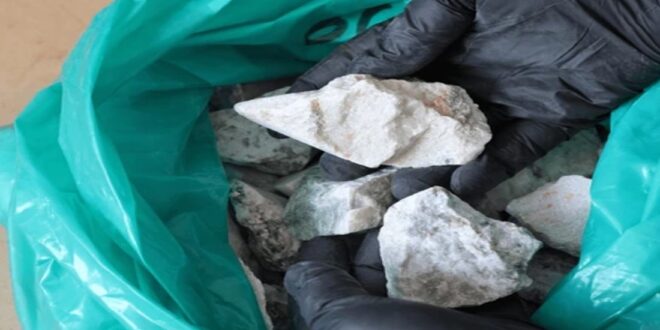
The discovery was made by private company Steron Mining in partnership with the Nigerian Geological Survey Agency (NGSA), which later validated the findings through geological verification. Steron Mining also disclosed separate exploration results indicating approximately 3.3 million tonnes of lithium reserves within its Abuja-area operations, alongside broader mineral resources estimated at 94.8 million tonnes across lithium-bearing ore and associated granitic formations.
The developments come amid intensifying global demand for battery metals such as lithium, nickel and rare earth elements, driven by electric vehicle production, grid-scale energy storage and renewable energy infrastructure expansion. Nigeria’s lithium sector is already attracting significant foreign investment interest, particularly from Chinese industrial groups including Jiuling Lithium and Canmax Technologies, which have collectively committed more than $1.3 billion toward processing and downstream development projects, including facilities in Kaduna State.
Government policy has increasingly focused on domestic beneficiation and value addition, with emphasis on moving away from raw ore exports toward local processing and industrial development. Steron Mining indicated that parts of its operations already include preliminary local processing in line with this policy direction. However, industry stakeholders continue to highlight structural constraints that could affect development timelines, including infrastructure gaps, power supply limitations, regulatory bottlenecks and the persistence of artisanal mining activity across parts of the sector.
Despite these challenges, the discovery reinforces Nigeria’s growing ambition to establish itself as a competitive destination for critical minerals investment within Africa’s rapidly evolving mining landscape.