 Ghana Mining Review A reliable source of mining industry news in Ghana


Related Articles

Stronger production, higher gold prices and improving operational performance have put Asante Gold on a firmer footing in the first half of 2026, although the Ghana-focused producer remains under pressure to strengthen liquidity and convert its operational gains into sustainable profitability. The company produced 117,076 equivalent ounces of gold in the first half of 2026, a 46.1% increase from the same period last year, while revenue more than doubled to $543.8 million. Adjusted EBITDA also rose sharply to $160.1 million, compared with $4.4 million in H1 2025.
The improvement was supported by a 52.8% increase in the average realised gold price and a 46.6% increase in gold equivalent ounces sold. Asante reported H1 all-in sustaining costs of $4,070 per ounce, compared with $3,496 per ounce in the prior-year period. Acting Chief Executive Officer of Asante, Campbell Baird, said the company was beginning to move from establishing its operational platform towards more consistent delivery of the benefits of recent investment.
“During Q2 2026, Asante continued to build on the strategic and operational review commenced earlier this year. As noted in our 2026 guidance and operating update last week, we believe the business is beginning to transition from operational platform establishment to more consistent and predictable delivery of the benefits of recent invested capital. We are also positioning for further improvement in operational performance in 2027, underpinned by the operating capacity established over the course of 2026. We are also pleased to have bolstered our senior team in recent months with the addition of a proven mining executive, Glenn Baldwin as Chief Development Officer to support this transition and we expect to make further appointments in the short term,” said Baird.
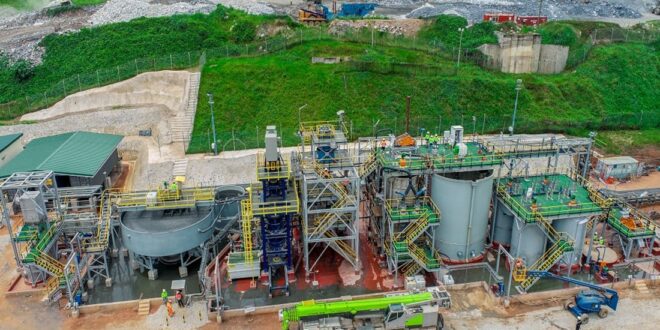
At Bibiani, the mining fleet reached full planned capacity during the quarter, while the operation is moving into higher-grade material in the northern section of the Main Pit. The company expects this transition to support stronger production during the second half and into 2027. Bibiani produced 51,737 equivalent ounces during H1, more than double the 25,499 ounces recorded in the comparable period, while H1 revenue reached $243.5 million. Recovery also improved to 75.2% from 68.4%.
At Chirano, H1 production increased to 65,339 equivalent ounces from 54,627 ounces, supported by higher ore processed and improved grade. Open-pit mining at Aboduabo and stronger underground production contributed to the increase. Baird said efficiency measures were also gaining traction across the business, with approximately $50 million of previously planned capital expenditure deferred or cancelled so far in 2026. He noted, “We are excited by the further exploration opportunity that exists at both Bibiani and Chirano. Our recently updated NI 43-101 technical reports, filed in early August, demonstrate the sort of mineral inventory additions that can be delivered with relatively modest exploration. Against this backdrop, and our re-energised exploration focus across 2026 (and 2027), we believe there is outstanding potential for strong growth in our Mineral Resource and Reserve bases over coming years.”
The company’s updated technical reports put combined Measured and Indicated Mineral Resources at 4.6 million ounces across Bibiani and Chirano, despite more than 430,000 ounces being mined from the two operations over the previous two years. A further 1.8 million ounces of Inferred Mineral Resources provides additional conversion potential. Asante has allocated approximately $23.4 million to exploration in 2026, with drilling targeting near-mine opportunities and extensions of mineralised zones across both operations.
The company expects its full-year production to reach between 275,000 and 300,000 equivalent ounces at consolidated AISC of $3,200 to $3,600 per ounce. The outlook assumes substantially higher production and lower costs in the second half, particularly as Bibiani accesses higher-grade material. The operational improvements come against a challenging financial backdrop. As at June 30, Asante had $57.8 million in cash and a working capital deficiency of $217.6 million. The company is pursuing additional financing and has been in discussions with lenders regarding its liquidity requirements, debt facilities and potential restructuring.
The immediate priority is to sustain the production gains, lower costs and strengthen the balance sheet while using the resource base and exploration portfolio to support longer-term growth. Baird concluded, “Together, our operational momentum, strengthened leadership team and growing exploration potential give us confidence in translating the platform we have built across the first half into a growing, predictable and sustainable operation.”