 Ghana Mining Review A reliable source of mining industry news in Ghana


Related Articles


Ghana’s government has officially repealed a controversial law that allowed the presidency to authorize mining in the nation’s protected forest reserves. Environmental groups and labour unions have hailed the decision as a major victory, signalling a decisive shift in the country’s approach to resource management under the newly inaugurated President John Dramani Mahama. The move underscores the administration’s commitment to balancing economic development with environmental protection, a message that has resonated strongly with civil society and local communities alike.
In December, the Minister for Lands and Natural Resources, Emmanuel Armah-Kofi Buah, presented the Environmental Protection (Mining in Forest Reserves) Revocation Instrument in Parliament. This new measure officially nullifies Legislative Instrument 2462 (L.I. 2462), a 2022 regulation that had amended existing mining laws to permit industrial activity in previously protected forest areas. The repeal also fulfils a central campaign promise made by President Mahama, who took office on January 7, 2025, committing to safeguard Ghana’s ecological resources. Analysts suggest that this move not only reinforces environmental protections but also signals a broader shift toward sustainable governance in the country.
“This clearly must send a message that this government is committed to basically ensuring that we continue to protect our pristine forest reserves and our environment,” Minister Buah told reporters. He acknowledged that the move was largely driven by a surge of public pressure that reached its peak in late 2024. During that period, a wide coalition of civil society groups and labour unions, including the Trades Union Congress, had even threatened nationwide strikes if the regulation was not revoked. The episode highlighted the growing influence of public opinion in shaping national environmental policy, reinforcing the importance of accountability in government decision-making.
Before the 2022 amendment, nearly 98% of Ghana’s production forest areas were strictly protected, leaving just 2% legally available for mining. Critics contended that L.I. 2462 not only threatened biodiversity but also undermined Ghana’s international commitments under the Paris Agreement and the Convention on Biological Diversity. Environmental organizations further noted that the law conflicted directly with the Forest Development Master Plan (2016–2036), which envisions a complete phase-out of mining in forest reserves within the coming decade.
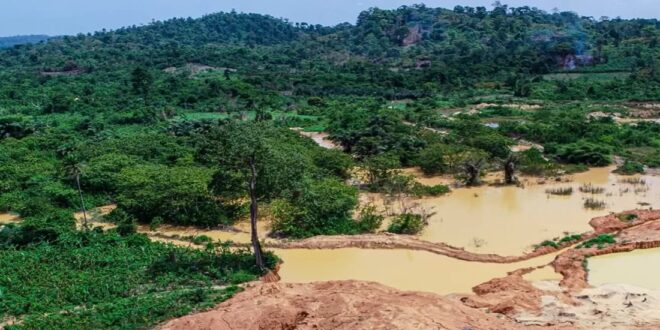
While the repeal represents a legislative victory, both industry observers and environmental activists remain cautious about what lies ahead. A coalition of public interest groups emphasized that although the “state-sanctioned destruction” permitted under L.I. 2462 has ended, illegal artisanal mining—commonly known as “galamsey”—continues to pose a serious threat to the sector’s stability and the nation’s water resources. Recent reports have drawn attention to the severe pollution of the Pra River, a vital waterway heavily impacted by unregulated gold mining. Experts warn that without sustained enforcement and community engagement, such environmental pressures could undermine the progress achieved through the legislative repeal.
“L.I. 2462 was state-sponsored destruction of our forest reserves,” said Awula Serwah, founder of Eco-Conscious Citizens. She cautioned that the legislative repeal alone would not stop those operating outside the law. “As for the illegal miners, they are not waiting for licenses to mine, and the revocation of L.I. 2462 makes no difference to them. They are not concerned with laws. They just cause ecocide with impunity.”
Attention is now turning to the next critical step: moving from legislative repeal to tangible forest restoration. Environmental groups are urging the government to enforce a swift rollout of a National Forest Protection Strategy, alongside a stronger implementation of the “Tree for Life” program. These initiatives aim to ensure that restoration efforts go beyond mere “rhetoric”, delivering real recovery of degraded lands both within and beyond official forest reserves. Experts note that the success of these programs will be a defining test of Ghana’s commitment to sustainable environmental management and the protection of its ecological heritage for future generations.